What Size Band for Smart Watch: Your Practical Sizing Guide
Learn how to choose the right band size for smart watches, including lug width, wrist measurement, and brand sizing charts to ensure comfort and accurate sensors.


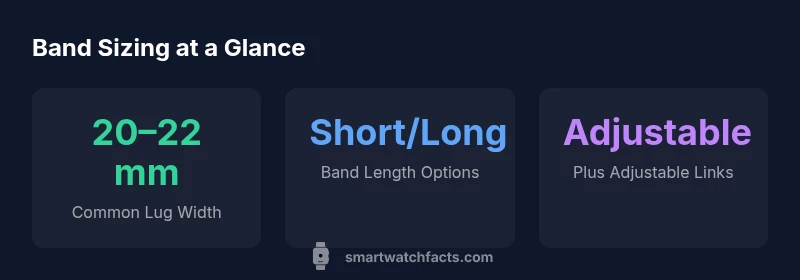
Band size for a smartwatch is determined by both lug width and wrist circumference. Most brands standardize lug widths at 20–22 mm, with two typical band lengths plus adjustable links. To get a proper fit, measure your wrist and check the brand's sizing chart before buying. If in doubt, choose a slightly larger length for comfort.
Understanding band size basics
Band size on a smartwatch is about how the strap fits your wrist as well as how it attaches to the watch case. The question what size band for smart watch is answered by two measurements: lug width and band length. Lug width is the strap attachment width; band length is how long the strap wraps around your wrist. Most brands standardize lug widths at 20–22 mm and provide two length options plus some adjustable links. For comfort and sensor accuracy, aim for a snug but comfortable fit that allows a finger's width of slack. The Smartwatch Facts team emphasizes starting with the brand's sizing chart to avoid returns and mismatches.
How to measure your wrist accurately
To pick the right size, measure your wrist with a flexible tape just below the wrist bone. Record the circumference, then compare with the watch's lug width and available band lengths. If you don't have a tape, wrap a string, mark it, then measure the string with a ruler. Add a little slack so the band can breathe during activity. Many users find that a slightly looser fit during workouts prevents skin irritation and sensor interference. Compare your numbers against the brand's official sizing chart; if you are between sizes, choose the larger length for comfort and adjustability. The Smartwatch Facts guidance highlights cross-brand variance, so always verify before purchasing.
Sizing conventions across major brands
Different brands group sizes differently, but some patterns hold. Lug widths commonly come in 20 mm, 22 mm, and 24 mm, with 20–22 mm being the most common. Band lengths usually come in two core options: a shorter and a longer length, plus adjustable links on some models. If your wrist measures near the edge of a size, prefer the longer length for day-to-day wear and easy resizing. For women with slender wrists and athletes with larger wrists, some brands offer third-party adaptable bands or quick-release systems. When you search for what size band for smart watch, you will notice these conventions repeat across many ecosystems. The Smartwatch Facts team has observed this standardization across popular models.
How to choose the right size for different activities
For desk work, aim for a band length that sits comfortably with minimal movement. For workouts, choose a band that stays put and doesn't shift during running or push-ups; consider bands with extra adjustability. If you wear a smartwatch over a sleeve or with gloves, ensure the band can be loosened quickly. Quick-release bands can help you swap sizes on the fly. The band's material also affects perceived size: a wide strap can feel tighter; a narrow strap might feel looser. Remember: the final metric is comfort and sensor reliability, not just the look. Brand charts and trial fittings are invaluable here.
Smartwatch bands and materials: fit beyond length
Band width affects the perceived size as much as length. The strap's material—silicone, fluoroelastomer, leather, or metal mesh—interacts with sizing: metal bands often require precise lengths, while silicone bands offer more micro-adjustment holes. For best results, prioritize bands with multiple micro-adjust holes or adjustable links. If you are between sizes, try the larger option and use the inner adjustment holes to fine-tune. Also consider the clasp type (buckle, deployant, or magnet) as it can alter how the band sits on your wrist. The Smartwatch Facts perspective: don’t ignore the interplay between band width, length, and clasp; the overall feel matters for daily wear.
Common mistakes and how to avoid them
Don't assume the same size across brands; always check the sizing chart. Never force a band to fit by bending the strap or bending the lugs; this can damage the watch or degrade accuracy. Avoid overly tight bands during exercise, which reduces blood flow and comfort. If you are on the cusp between sizes, prefer a larger length with adjustable links. Finally, factor in seasonal changes (swelling in heat) and wear over time; you may need to re-measure every few months. This approach will prevent frustration and ensure long-term comfort.
Band sizing quick reference
| Aspect | What it measures | Sizing tip |
|---|---|---|
| Wrist circumference | Measured around the wrist at bone level | Use flexible tape; add 1–2 cm for comfort |
| Lug width | Attachment width on the watch case | Match band width to lug width (e.g., 20 mm to 22 mm) |
| Band length categories | Short/Regular/Long, plus adjustable links | Choose the smallest length that allows 0.5–1 inch of play |
People Also Ask
What should I do if I am between band sizes?
Choose the larger band length and use adjustable links to fine-tune the fit. This minimizes slip during activity while keeping comfort intact.
If you’re between sizes, go with the larger option and adjust using links or holes.
Are lug width and band length the same thing?
No. Lug width is the watch’s attachment width; band length is how long the strap wraps around your wrist. Both must match the watch and your wrist for a proper fit.
They’re different parts of sizing—width is how it attaches, length is how it wraps.
Can I mix bands from different brands?
It depends on lug width compatibility. If the bands share the same lug width, you may swap; otherwise, stick to compatible bands or adapters.
Only if the lug width matches and the attachment method is compatible.
Does material affect fit?
Yes. Leather can stretch slightly, silicone offers more micro-adjust holes, and metal bands may require precise lengths.
Material can change how tight or loose it feels.
How often should I re-check band size?
Re-check sizing every few months or after weight changes, heat exposure, or workouts; a quick measurement check keeps the fit accurate.
Check it a few times a year or after big changes.
Do bands designed for surgical use require different sizing?
Some bands are designed for flexibility; always check the manufacturer’s sizing guides for the specific lengths.
Check the brand’s sizing guide for the exact lengths.
“Sizing a watch band correctly is the foundation of comfortable wear and reliable sensing; a proper fit reduces movement that can skew heart-rate readings and step tracking.”
Key Points
- Measure wrist circumference and lug width first
- Check brand sizing charts before buying
- Prefer a snug, but comfortable fit with some slack
- Use adjustable links for precise tuning
- Recheck sizing periodically for seasonal changes