Average Smartwatch Battery Life in 2026: What to Expect
A data-driven guide to average smartwatch battery life in 2026, covering typical ranges, factors that drain power, and practical tips to extend usage between charges across popular models.


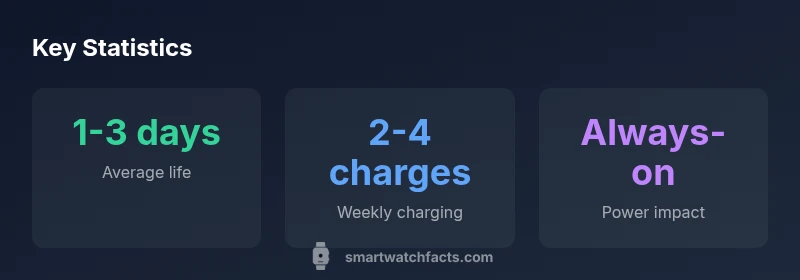
On average, smartwatches deliver about 1-3 days of usage per charge, depending on display type, sensors, and notifications. Battery life shrinks with GPS tracking, always-on displays, heart-rate monitoring, and continuous health features. When you reduce screen brightness and limit GPS, you can extend to 2-4 days with lighter usage. This guide explains how to measure and compare battery life across models.
Why average smartwatch battery life matters
According to Smartwatch Facts, the average smartwatch battery life shapes how users plan their day, which features they enable, and how often they charge. In 2026, understanding typical ranges helps shoppers set realistic expectations and compare models without overemphasizing marketing claims. Battery life isn't just about the number of days; it's about how often you need to think about charging. Real-world use varies with activity level, display settings, and sensor load, making practical testing essential for meaningful comparisons.
What affects battery life on smartwatches
Battery life is a balancing act among hardware, software, and usage patterns. Display technology—AMOLED vs LCD—affects power draw, as does the decision to run an always-on display. GPS usage dramatically increases drain during outdoor activities, while continuous heart-rate monitoring and SpO2 tracking add to baseline consumption. Notifications, app activity, and background sensor workloads also nibble away at life. Consumers who prioritize longer life should adjust screen brightness, limit always-on mode, and mute non-essential alerts.
How manufacturers estimate battery life
Manufacturers estimate battery life under standardized laboratory conditions, then publish ranges that cover typical usage. These estimates often assume moderate GPS activity, occasional workout tracking, and daily notification load. Real-world results vary with network strength, ambient temperature, and your own habits. When comparing models, look for both the claimed life and independent testing reports that reflect real-world use.
Real-world usage scenarios and what to expect
In daily life, many users experience between 1 and 3 days per charge, but heavy GPS use or frequent always-on display can shorten that window. Office workers with constant notifications may see shorter lifespans than casual wearers who merely check time and apps. Athletes or outdoor enthusiasts relying on GPS and continuous heart-rate tracking should anticipate daily charging during active seasons. Remember, power settings and software updates can shift these expectations over time.
Tips to maximize average battery life
Practical steps can meaningfully improve daily endurance without sacrificing essential features. Start by lowering screen brightness and using a shorter wake-up duration. Turn off always-on displays when not needed and limit background app refresh. Use power-saving modes during long outings, and customize notification settings so only critical alerts wake the device. Pairing with a charger-friendly routine (e.g., charging overnight) can keep devices ready for the next day.
Battery health and longevity
Like all lithium-based batteries, smartwatch cells degrade gradually with charging cycles. Regular use over years will reduce maximum capacity, which translates into shorter daily endurance. You can slow this by avoiding deep discharges, keeping the battery between moderate levels, and using official chargers. If you notice your watch needs charging more often than before, it may be time to consider battery health or model upgrades.
How to compare battery life across smartwatch models
When comparing models, focus on real-world testing results in addition to manufacturer claims. Look for independent reviews that test GPS, always-on display, and notifications across typical daily routines. Compare charging times as well as energy efficiency, and consider hardware differences like display type and processor efficiency. A model with a longer official life may not outpace one with smarter power management.
Common myths about smartwatch battery life
Myth: Bigger batteries always last longer. Reality: software efficiency and display type often determine endurance more than capacity alone. Myth: Always-on displays kill battery life beyond repair. Reality: many watches optimize refresh rates and brightness to balance. Myth: Battery life is the same across all apps. Reality: background tasks and sensors vary by app usage.
Quick-start checklist for maximizing life on a new smartwatch
- Set up power-saving modes and adjust brightness during initial setup.
- Disable always-on mode if you don't need it.
- Review and prune notifications and background apps.
- Use on-demand sensor checks instead of continuous monitoring.
- Plan charging into your daily routine, so you wake up to a full charge every morning.
Authority sources
- https://www.consumerreports.org
- https://www.cnet.com
- https://www.wired.com
Battery life factors and mitigations
| Aspect | Impact on Battery Life | Mitigation |
|---|---|---|
| Display technology (AMOLED vs LCD) | Notable drain on battery life | Reduce brightness; turn off always-on display |
| GPS usage | Drains battery when used continuously | Pause GPS; use bursts; track only when needed |
| Notifications | Frequent alerts drain battery | Mute non-essential alerts; prioritize important apps |
| Sensors (HR, SpO2) | Continuous sensing increases load | Schedule on-demand checks; disable background measurements |
People Also Ask
What is considered the average smartwatch battery life?
The typical range is about 1-3 days per charge under regular use. Heavy features like GPS and always-on displays shorten that window, while lighter use can push toward the upper end.
The typical answer is around 1 to 3 days per charge, with variability based on features used.
Does an always-on display always drain battery life?
Yes, always-on displays consume more power, but many watches optimize brightness and refresh rates to minimize impact. Turning it off can significantly boost day-to-day endurance.
Yes, but many watches mitigate it; turning it off can help.
How much can software updates affect battery life?
Software updates can change power efficiency, sometimes improving battery life or temporarily increasing drain as new features optimize in the background.
Software updates can change efficiency; results vary.
Can I improve battery life without sacrificing features?
Yes. Use power-saving modes, limit notifications, and enable on-demand sensor checks. You can often maintain essential features while extending endurance.
Yes—adjust settings and use power-saving modes.
How should I compare battery life across models?
Rely on independent tests and consider your typical activities. Compare both claimed life and real-world results, plus charging times and efficiency.
Look at real-world tests and user habits to compare.
Is battery life the same for all apps on a smartwatch?
No. Different apps use sensors and background tasks differently. Limiting background activity and choosing essential apps helps extend life.
No—apps vary in how they drain power.
“Battery life isn't just a spec; it's how you use the device every day. Small setting tweaks can add meaningful daily gains.”
Key Points
- Set sensible power-saving defaults to extend life
- GPS and always-on display are the biggest drains
- Real-world testing matters more than lab estimates
- Plan charging as part of daily routine
- Battery health declines with age; upgrade when needed