Smart Watch vs Apple: A Practical Buying Guide
Analytical buying guide exploring whether smart watch better than apple, covering ecosystem, battery life, health features, app ecosystem, and price. Learn how to choose based on platform, budget, and daily needs.


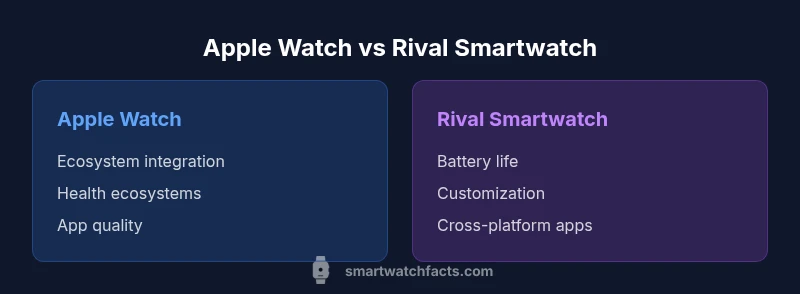
Is there a clear winner when you ask if a smart watch better than apple? The short answer is: it depends on your priorities. For iPhone users, the Apple Watch tends to offer the most seamless integration, health features, and app ecosystem. On the other hand, rival smartwatches can outperform Apple on battery life, price, or customization, especially for Android users or those who value cross-platform features. The guiding question smart watch better than apple remains context-dependent, and the best choice aligns with your devices, daily routines, and budget.
Defining the comparison: what the phrase smart watch better than apple means
When shoppers ask whether a smart watch is 'better' than Apple, they are weighing a bundle of trade-offs: ecosystem alignment, core features, price, and long-term value. The phrase smart watch better than apple has become shorthand for evaluating cross-platform compatibility, battery life, health features, and app support. According to Smartwatch Facts, the 2026 landscape emphasizes platform flexibility for some users and deep, polished integration for others. This article frames Apple Watch as a benchmark for iPhone users, while also clarifying where rivals can outperform it in daily use. The goal is not to crown a single winner but to map decision criteria to real-world needs. If you rely on iMessage, Siri, and native health features, Apple Watch often pays back with a cohesive experience. If you prioritize longer battery life, lower upfront cost, or a broader app catalog, other brands may present a compelling alternative. The central question remains: what features matter most to you?
Apple Watch strengths: why many users prefer it
Apple Watch is widely favored by iPhone households for a reason: a tightly integrated software stack that blends notifications, health data, and app access into a single, low-friction experience. The device delivers reliable heart-rate monitoring, ECG capability on supported models, and SpO2 tracking, all tied to a single health app that syncs with iPhone health records. The ecosystem advantage extends to software updates, security, and a growing library of third-party apps curated for quality and privacy. For many users, this creates a 'it just works' moment—consistent performance across apps, accelerometer-based workouts, and on-device features like fall detection. When you add access to Apple services, family setup, and seamless iPhone pairing, Apple Watch often becomes the default choice for those who prioritize convenience and coherence over raw feature count.
Rival smartwatches: standout features that Apple Watch may miss
Rival devices often shine where Apple Watch may not. Some non-Apple watches offer longer battery life, with a week or more on lighter use, which can be a critical advantage for travelers or outdoor enthusiasts. Others price aggressively, providing strong health sensors, sleep tracking, or independent GPS without requiring a phone nearby. Some models emphasize customization—watch faces, bands, and always-on display options—giving users a level of personalization Apple Watch currently can't match. Additionally, cross-platform compatibility means you can pair these watches with Android phones with fewer ecosystem lock-ins, which is a meaningful benefit if you own multiple devices. Finally, some rivals place a heavier emphasis on fitness-focused experiences—open workout apps, more robust third-party app ecosystems, and alternative health metrics—appealing to users who want core features beyond what Apple emphasizes.
Battery life and charging: a key differentiator
Battery life matters in day-to-day use and travel. Apple Watch models generally require daily charging for full functionality, especially with heart-rate monitoring, GPS tracings, and rich notifications. In contrast, leading rival watches often push longer life per charge by using lower-power displays, more efficient processors, or reduced always-on features. The trade-off can be fewer health metrics per session or slower app refresh rates, but for many users, a watch that lasts multiple days is worth the slight sacrifice in some integrations. Charging speeds vary by model and charger standard, but many non-Apple options support faster or wireless charging with broader compatibility. Understanding your daily routine—commute, workouts, sleep tracking—helps determine whether battery longevity or ecosystem depth should take priority.
Health and sensors: ECG, sleep metrics, and more
Health features drive a lot of the perceived value in smartwatches. Apple Watch has widely recognized health capabilities, including ECG, heart-rate monitoring, SpO2, and sleep tracking, coupled with a polished health app and privacy protections. Rival devices often offer comparable sensors, sometimes with longer battery life or more accessible health metrics in third-party apps. Some rivals provide alternative sensors such as skin temperature or advanced motion tracking in specialized models. When evaluating health features, consider data accuracy, how metrics translate into actionable insights, and how well the data integrates with your preferred health apps. Also assess data export options and whether the device supports hospital-grade health records or third-party health services.
App ecosystem and software updates
Apple's app ecosystem remains a strong selling point for many buyers. The curated App Store, strong privacy guarantees, and consistent OS updates contribute to a stable, predictable experience. Rival platforms may offer a broader array of third-party apps and open APIs, yielding customization but adding variability in app quality and update cadence. On the software side, consider OS updates' frequency and compatibility with your other devices. If you rely on specific apps for workouts, payments, or productivity, verify compatibility and update cycles before committing. The trade-off is often between a polished, controlled experience (Apple) and flexible, open development (rival watches).
iPhone compatibility vs cross-platform use
For iPhone owners, Apple Watch is often the simplest pairing, delivering near-zero setup friction and a deep integration with iOS features like Messages, Reminders, and Apple Health. Android users typically gain flexibility with rival watches, though some features may feel siloed or require companion apps. If you own both iPhone and Android devices or anticipate switching platforms, a cross-platform watch can reduce friction but sacrifice some depth of integration on either side. If you value quick access to notifications and workouts within a single app, ensure your choice aligns with your device ecosystem. In this context, the question smart watch better than apple isn’t universal—it depends on device parity and how you use your phone daily.
Pricing and total cost of ownership
Apple Watch often carries a premium price, but buyers justify it with long-term software support and high resale value. Rival watches frequently undercut Apple’s initial cost, offering strong features for less upfront. When evaluating price, include the total cost of ownership: ongoing battery replacements, sport bands, charging accessories, and potential app purchases. Consider whether a lower upfront price grossly offsets shorter software support or fewer exclusive features. If budget is a top priority, you may find compelling value in rival watches, particularly if you don’t rely heavily on the exclusive Apple ecosystem. However, a higher upfront investment may pay off later through continued OS updates and ecosystem advantages.
Build quality, durability, and water resistance
Both Apple Watch and rival watches emphasize durable materials and water resistance. Apple tends to pair premium materials and a strong build with durable bands; rivals may use different alloys, glass types, or rugged designs that excel in harsh environments. Evaluate water resistance ratings, scratch resistance, and the availability of rugged models for sports or outdoor use. Durability often correlates with price, brand warranty, and repairability. If you work in wet conditions or rough environments, a watch with robust seals and comfortable, secure straps will matter more than brand prestige.
How to choose: mapping priorities to models
Start by listing your top priorities: battery life, health metrics, ecosystem depth, app availability, and price. If iPhone integration is paramount, Apple Watch consistently stands out. If long battery life and customization beat close integration, a rival watch may be the better fit. Create a scoring rubric for each priority, assign weights, and compare models side-by-side. Wear tests and in-store trials can help reveal how responsive the touchscreen, haptics, and voice assistants feel in real life. Finally, verify product support and warranty terms. A careful mapping of needs to features makes the decision transparent and repeatable.
Practical setup and day-to-day usage tips
Once you pick a watch, configure it to maximize value: set up essential health metrics, enable automatic workouts, and tailor notifications to minimize distraction. Use shortcuts or widgets to access critical info quickly. If compatibility is important, set up your phone to mirror messages, calendar events, and reminders. Stock with the right bands for comfort and durability, and keep the charger accessible. Regular software updates and health data backups help maintain performance. A well-tuned watch becomes a daily assistant rather than a gadget, especially if you align its features with your lifestyle habits.
Common myths and realistic expectations
A common myth is that price alone determines quality. In reality, design, ecosystem, and privacy controls weigh heavily in value. Another myth is that bigger displays automatically improve usability; one must weigh readability, battery impact, and outdoor visibility. Some assume Apple Watch is always superior; in practice, rivals may outdo it in battery life, customization, or price for certain users. Finally, assume that you must choose one path at launch—many users revert to mixing devices or adjusting over time as needs evolve. Interpret each watch’s strengths in the context of your routines to avoid overgeneralizations.
Comparison
| Feature | Apple Watch | Rival Smartwatch |
|---|---|---|
| Ecosystem compatibility | Best with iPhone (native integrations) | Cross-platform compatibility with Android and iPhone |
| Battery life | Typically 18-36 hours with heavy use | Often 2-7 days depending on model and usage |
| Health sensors | ECG, SpO2, continuous HR | ECG or SpO2 equivalents, varied by model |
| App ecosystem | Large curated apps via App Store | Broader but less cohesive app selection |
| Pricing | Premium pricing with strong resale | Lower upfront costs; varies by model |
| Software updates | Regular OS updates across devices | Manufacturer-driven updates; cadence varies |
Strengths
- Strong health features and reliability
- Best integration with iPhone
- Excellent build quality and resale value
- Smooth software updates across devices
Weaknesses
- Higher price than many rivals
- Limited cross-platform features on non-Apple devices
- Some rivals offer longer battery life or broader customization
Apple Watch remains the strongest choice for iPhone users; rivals offer compelling value for cross-platform or budget-minded buyers
If you live in the Apple ecosystem, Apple Watch delivers the most coherent experience. For Android or mixed-device households, a rival may provide better battery life, lower upfront cost, or greater customization without sacrificing essential smartwatch capabilities.
People Also Ask
Is Apple Watch the best choice if I own an iPhone?
For most iPhone owners, Apple Watch provides the most seamless integration, notifications, and health data flow. You’ll get tighter access to Messages, Apple Health, and native features. However, it may come at a premium price and with less cross-platform flexibility.
If you own an iPhone, Apple Watch is typically the easiest choice for best integration.
Can a non-Apple smartwatch work well with an iPhone?
Yes, many rival watches pair with iPhones, offering solid health metrics and apps. You may miss some native iOS integrations, and software updates can vary by brand.
Yes, rivals can work with iPhone, but check app support and updates.
Which smartwatch has the best battery life?
Battery life varies by model, but several rivals offer multi-day usage under lighter workloads. Apple Watch tends to be shorter on battery life when all features run continuously.
Some rivals last longer per charge, especially for heavy workouts or travel.
Are health features superior on Apple Watch or competitors?
Apple Watch offers robust health features and accurate sensors, but some rivals provide unique metrics or longer tracking sessions. Overall, both categories deliver strong health data; the value depends on which metrics you prioritize.
Apple has strong health features, but rivals may offer different metrics you might value.
Is price a good predictor of value in smartwatches?
Not always. A higher price can reflect premium build and software support, but value depends on ecosystem fit, battery life, and the apps you rely on.
Higher price doesn’t always equal better value; consider your needs first.
Which watch has the best app ecosystem?
Apple Watch has a large, curated app ecosystem optimized for iOS users. Rival watches offer more cross-platform options, but app quality and quantity vary by brand.
Apple leads in app ecosystem, but rivals expand cross-platform options.
Key Points
- Prioritize ecosystem when choosing a smartwatch
- Expect best iPhone integration with Apple Watch
- Consider battery life if you travel or exercise often
- Budget-conscious buyers may find better value in rivals
- Test in-store with your phone to confirm app and notification behavior